API vs Webhook — Choosing the Right Trigger Model
Pull data when you control the timing; push events when the other system does.
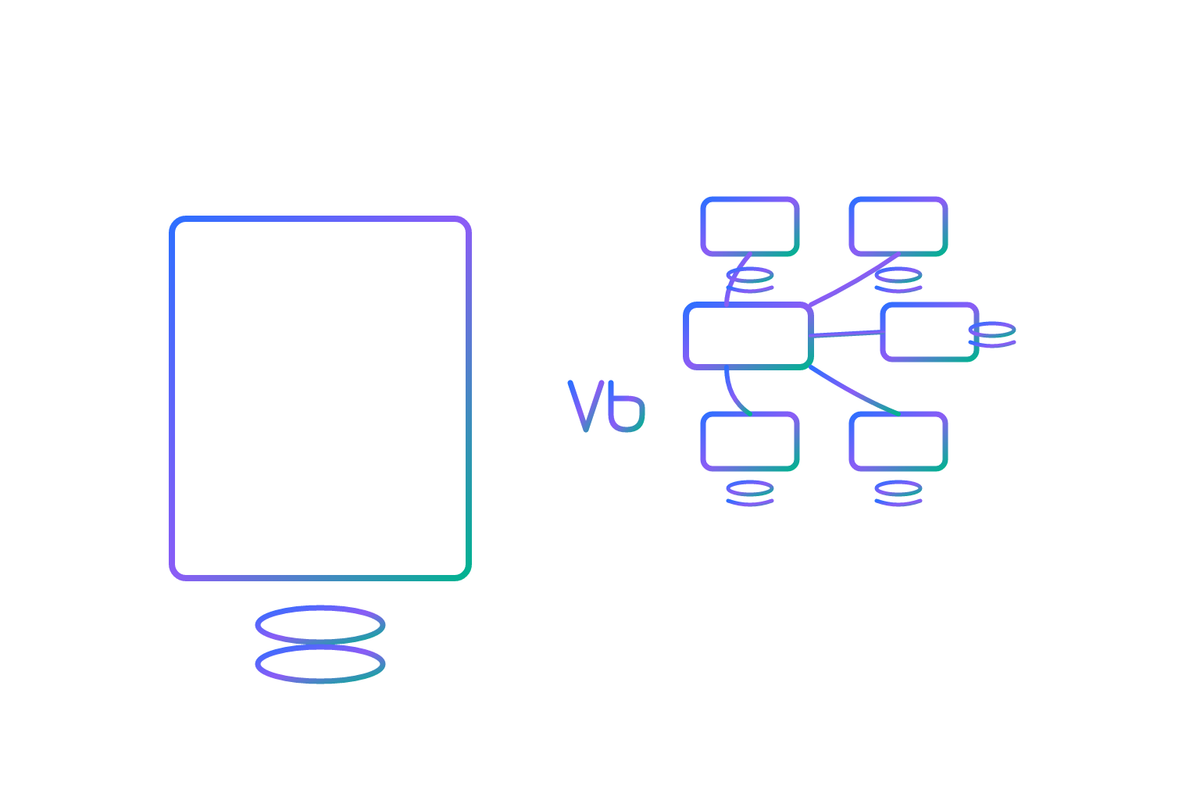
Every integration decision comes down to one question: who initiates the communication? Does your system reach out and request data, or does the other system notify you when something happens? That architectural question is what the terms "API" and "webhook" actually describe. Everything else — the latency characteristics, the server load, the security considerations — follows from that single decision about who initiates.
Getting this wrong rarely produces an immediate error. A poorly chosen trigger model doesn't throw an exception on day one; it quietly wastes resources on redundant requests, serves users data that is minutes stale, or produces an event handler fragile enough to break the first time a webhook arrives twice. The damage surfaces later, during an incident review, as a problem that is difficult to trace back to its origin.
To understand the scale of this decision: per Postman's October 2025 State of the API Report, 83.2% of organizations now describe themselves as "API-first," up from 74% in 2024. Yet those same organizations rely on webhooks extensively for anything requiring real-time delivery. APIs and webhooks are not competing approaches to the same problem. They are answers to two different questions, and conflating them is where integrations go wrong.
How the API Pull Model Actually Works
An API is a contract: your client sends a request, the server performs some work, and the server returns a response. Nothing happens until your code initiates the request. The server waits, inactive, until your system decides it is time to ask.
That is the pull model, and it is organized entirely around initiation on the client side. The standard HTTP methods each signal a different intent to the server:
GET retrieves data without modifying anything
POST creates something new
PUT or PATCH updates existing data, fully or partially
DELETE removes a resource
APIs are stateless by design. Each request must carry everything the server needs to process it, because the server retains no session state between calls. Every request stands alone, so all required parameters must be included each time.
Most APIs follow the REST architectural style. Some, particularly where query flexibility matters, use GraphQL. High-throughput systems communicating with other services often use gRPC. The underlying pull logic is the same across all three.
Trello's API is a practical example. To create a card, update its due date, or delete it, your code sends the appropriate request and Trello executes it. Trello never acts on its own to modify a card. It responds to requests.
If you want to know when something changes on Trello's side, you cannot simply wait for a notification. You must send repeated requests to check. That repeated checking is called polling, and it is where the pull model begins to show its limitations. APIs account for 57% of all internet traffic, which reflects how foundational this model is before considering its tradeoffs.
How the Webhook Push Model Actually Works
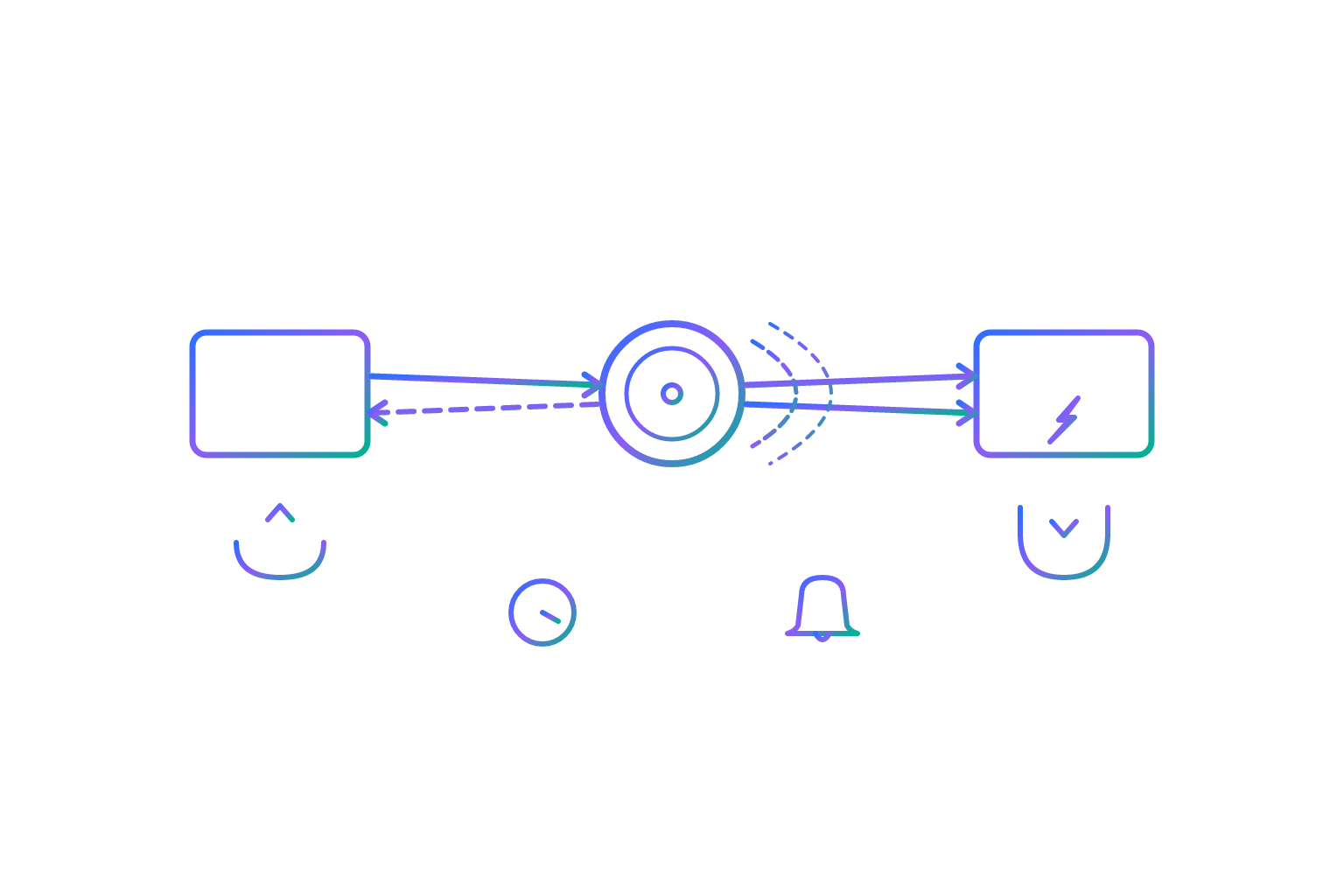
A webhook reverses the arrangement. It is an HTTP POST request that fires automatically when something happens on the source system's end, not because your code requested anything. You register a URL, specify which events you want to receive, and wait. The sending system handles delivery.
This is a publisher-subscriber pattern implemented over plain HTTP. A typical webhook delivery follows this sequence:
An event occurs in the source system, such as an order being placed or a payment clearing
The source packages that event into a JSON payload
It sends an HTTP POST to your registered endpoint
Your server responds with a 2xx status code to acknowledge receipt, and processing happens afterward, asynchronously
Each delivery is a self-contained transaction. The source system does not wait for your application to finish processing the data; it sends the notification and moves on.
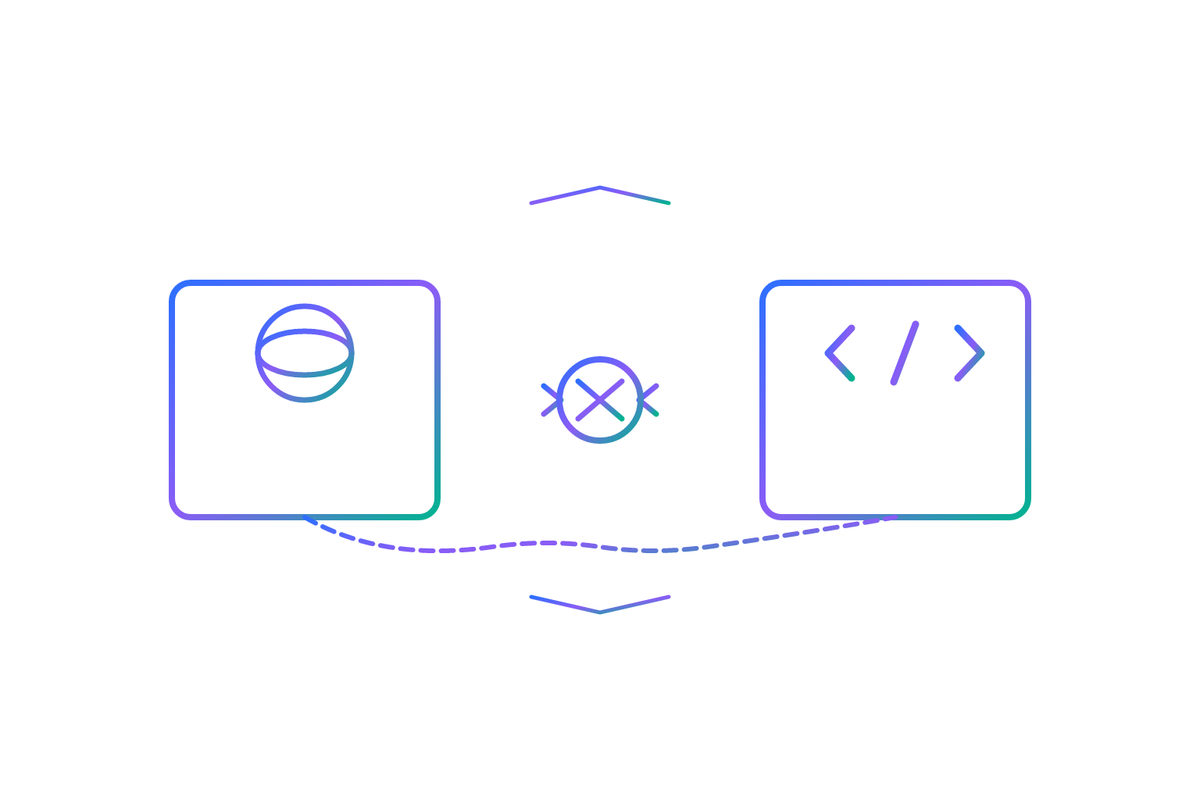
One distinction worth clarifying: webhooks are server-to-server, transmitted over plain HTTP. They are not WebSockets. WebSockets maintain a persistent, bidirectional connection, typically between a browser and a server, for use cases like live chat or collaborative editing. Webhooks are single-delivery notifications. Treating them as equivalent leads teams to build persistent-connection infrastructure for a problem that a simple HTTP POST would have resolved.
Shopify fires an orders/create webhook typically within seconds of a new order arriving, though delivery is not guaranteed and can occasionally lag. The store's backend learns about that order close to the moment it exists, without polling Shopify's API on a timer.
Twilio SendGrid operates on the same pattern through its Event Webhook: bounces, clicks, and opens are pushed to your endpoint close to the moment they occur.
Where Polling Fails at Production Scale
Polling every 5 seconds produces tens of thousands of requests per day per endpoint. Across 100 customers, that exceeds a million requests per day, the majority of which return no new data because nothing changed.
Staleness is inherent to the polling model, not something that can be tuned away. Polling every 5 minutes means your data can be nearly 5 minutes old regardless of how well the rest of the system performs.
In a messaging application, that problem becomes a functional failure. A 5-minute polling interval on message delivery means users wait up to 5 minutes to see a reply, which makes the product unusable for its core purpose.
The load problem scales proportionally. More customers and higher polling frequency produce more requests against the API server in direct proportion. Rate limits engage and performance degrades as the server handles requests for data that has not changed.
Webhooks introduce their own problems. If a source system emits a large volume of events per minute, the resulting flood of individual webhook deliveries can overwhelm a receiving server just as polling overwhelmed the source. In high-volume scenarios, batch polling can outperform processing every individual event as it arrives. Webhooks also require explicit handling of delivery failures, retries, and duplicate events.
Matching the Trigger Model to the Use Case
The guiding principle is straightforward: use an API when your system determines it is time to act. Use a webhook when the other system determines it is time to act.
APIs are appropriate when:
A user submits a form or clicks a button and expects an immediate response
A scheduled job requires fresh data at a predictable time
A workflow spans multiple systems and requires your code to coordinate the sequence
You are performing bulk updates against a predictable set of records, which maps cleanly to a direct API call
Your code requires one specific resource at a known point in execution
Webhooks are appropriate when the external system controls the timing:
Payment settlement is the standard example. Stripe's
POST /chargesreturns "accepted," not "settled." Confirmation that a charge actually completed arrives later via thecharge.succeededwebhook, sometimes seconds later, sometimes minutes. Assuming "accepted" means "completed" is a documented and recurring mistake.CI/CD pipelines depend on this pattern. GitHub's
pushandpull_requestwebhooks trigger builds immediately when code is pushed, rather than on a polling schedule.Inventory synchronization across sales channels requires real-time updates to prevent overselling products that are no longer available.
CRM automation triggered by external events, such as a deal changing stage or a user registering through an external identity provider, depends on the external system's timing rather than your own.
Some use cases fall between these two models. Long-polling and Server-Sent Events offer intermediate latency between plain polling and webhooks. WebSockets handle fully interactive, bidirectional, browser-facing cases such as live dashboards and collaborative editing.
Why Production Systems Run Both Models
Most production systems do not select one model exclusively. They use webhooks as the primary real-time channel and maintain periodic API polling as a reconciliation mechanism to recover events the webhooks did not deliver.
Missed deliveries occur for routine reasons: network interruptions, temporarily unavailable endpoints, or retry windows that expire before delivery succeeds. Stripe retries billing webhooks for up to three days. PayPal operates similarly. Once that window closes, the event is not redelivered.
Shopify's own reconciliation documentation describes this complementary approach and explicitly notes that applications may receive the same webhook more than once. Idempotency is therefore a requirement in any hybrid system. Processing the same event twice must produce the same outcome as processing it once. The standard implementation stores event IDs and checks them before acting on a payload.
Two metrics worth monitoring in any hybrid setup:
Delivery success rate: the percentage of webhook deliveries that received a 2xx response
Response latency: slow endpoints trigger provider timeouts, which register as failed deliveries and consume retry budget
Stripe's architecture illustrates why both models coexist. The API initiates the charge. The webhook confirms it settled. Neither is redundant, and neither can substitute for the other.
Securing Webhook Endpoints Against Real Threats
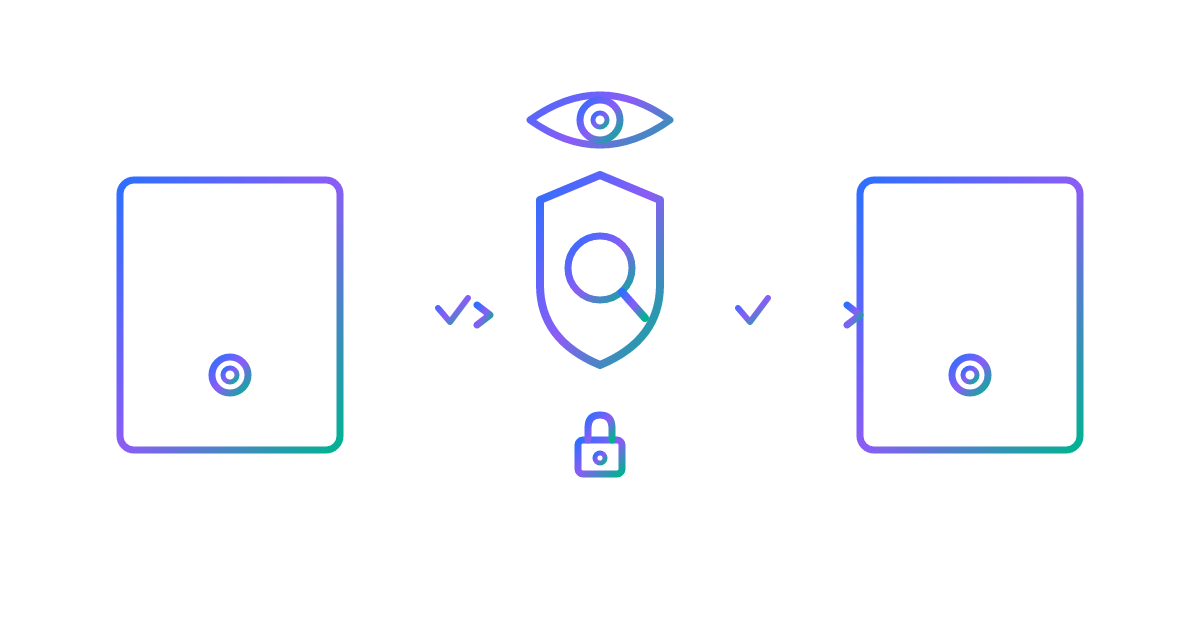
APIs and webhooks reverse the trust direction, and that reversal is why webhook security requires separate consideration. With an API, your code calls endpoints you have already authenticated. With a webhook, an external system is calling you, and you must verify quickly whether the request is legitimate.
Two distinct risks are present. First, authenticity: is this request actually from the declared source? Second, integrity: was the payload modified between the source and your server?
HMAC-SHA256 addresses both. The provider hashes the payload using a shared secret and includes that hash in a request header. Your server recomputes the hash independently and compares the values. A match confirms the payload is authentic and unmodified. Stripe, GitHub, and Shopify all implement this pattern. One implementation detail frequently skipped: use a constant-time comparison when checking hash values, or you introduce timing attacks that can expose the secret incrementally.
A minimum security implementation for webhook endpoints has three components:
HMAC signature verification on every payload
IP whitelisting, restricting inbound traffic to the provider's published IP ranges
Schema validation, enforcing a strict JSON Schema before any payload reaches business logic
Replay attacks require separate protection: a timestamp embedded in the signed payload, validated against a short tolerance window, combined with stored event IDs so a previously processed signed request cannot be submitted and executed again.
An emerging practice is ephemeral token rotation, where short-lived HMAC keys replace a static secret that remains valid indefinitely and represents a persistent exposure.
These risks are not theoretical. A 2023 cryptocurrency exchange breach exploited unauthenticated webhooks to push through fraudulent transactions. A separate vulnerability involving insufficient input validation in a widely used file-transfer platform affected a large number of organizations. Both cases demonstrate that an unguarded inbound endpoint is a meaningful attack surface.
Regulatory requirements apply here as well. PCI DSS, HIPAA, and GDPR each impose specific requirements on webhook implementations: TLS in transit, audit logging, and minimizing sensitive data in the payload. The regulatory exposure scales with what the webhook carries.
A Decision Checklist for Your Next Integration
The decision can be reduced to a short checklist:
Your system initiates the action: use an API
The external system initiates the action: use a webhook
Real-time delivery is required and event volume is manageable: webhook as primary, API polling as reconciliation
Event volume is too high for per-event processing: periodic batch retrieval through the API
The interaction is bidirectional and browser-facing: WebSockets, not webhooks
This checklist addresses the mistakes that recur in production: polling for payment settlement instead of listening for the confirmation webhook; routing bulk administrative updates through webhooks instead of a scheduled API call; treating an API's "accepted" response as confirmation of completion; and skipping idempotency handling until a production incident makes the omission visible.
Most integrations begin on the API side because synchronous request-response is easier to test and reason about. Webhooks are typically added later, once the cost of sustained polling becomes difficult to justify. Starting instead by identifying which system owns the timing for each event, and letting that determination drive the choice of trigger model, produces integrations that hold up better under production traffic.