Web Service vs API — Technical Differences That Affect Integration Choices
Choosing between web services and APIs hinges on whether your integration crosses a network.
Every web service is an API. Not every API is a web service. The two terms overlap because one genuinely sits inside the other, like a smaller box tucked inside a bigger box.
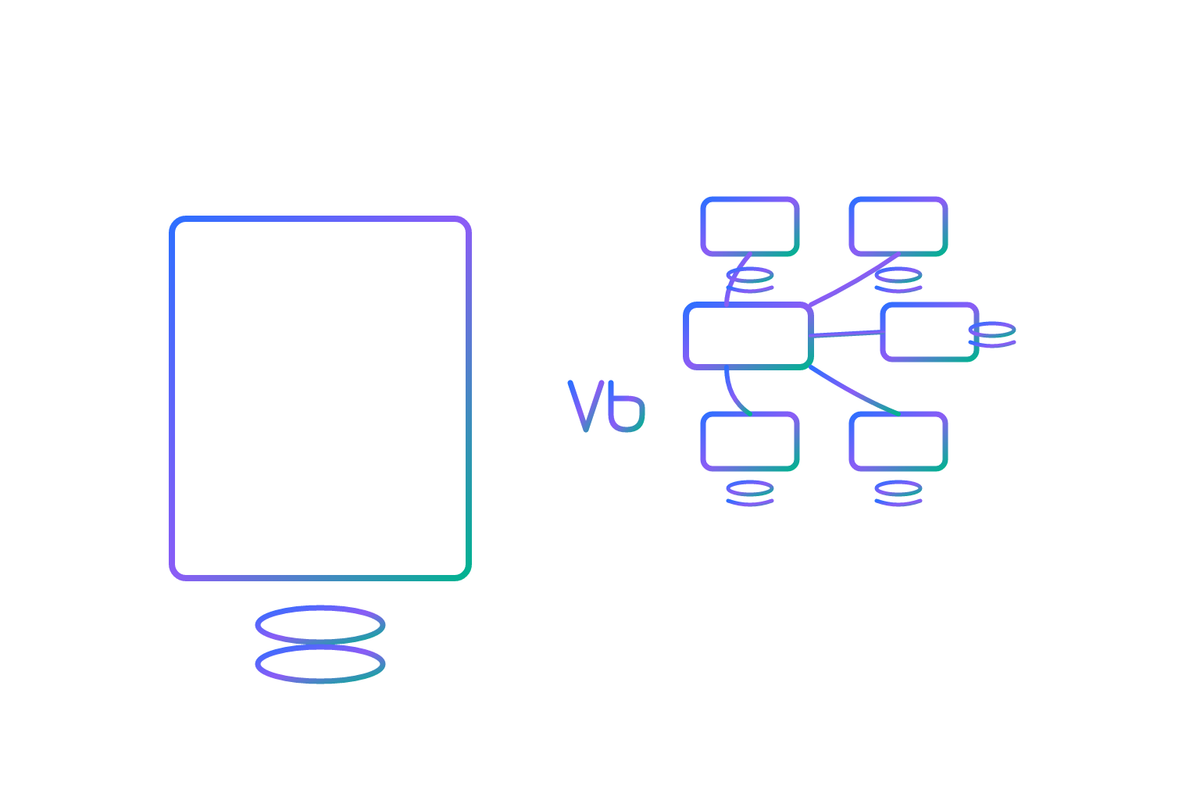
Picture a Venn diagram. APIs are the big circle. Web services are the corner of that circle that touches a network. Calling sqlite3_open() on a database sitting on your laptop is a pure API call. No network, no HTTP, no web service, just your program talking to a file on disk. Calling fetch('https://api.mongodb.com/v1/databases') is a different animal entirely: that request leaves your machine, crosses the internet, and hits someone else's server. That's an API too, but it's also a web service, because it traveled.
Why does this matter for someone picking an integration path? Because the subset relationship tells you what's off the table before you've even started comparing protocols. If your integration never leaves the host machine, web services are irrelevant by definition. If it has to cross a network boundary, you're automatically inside web-service territory, and the only real question left is which style of web service fits.
Four Constraints That Define a Web Service
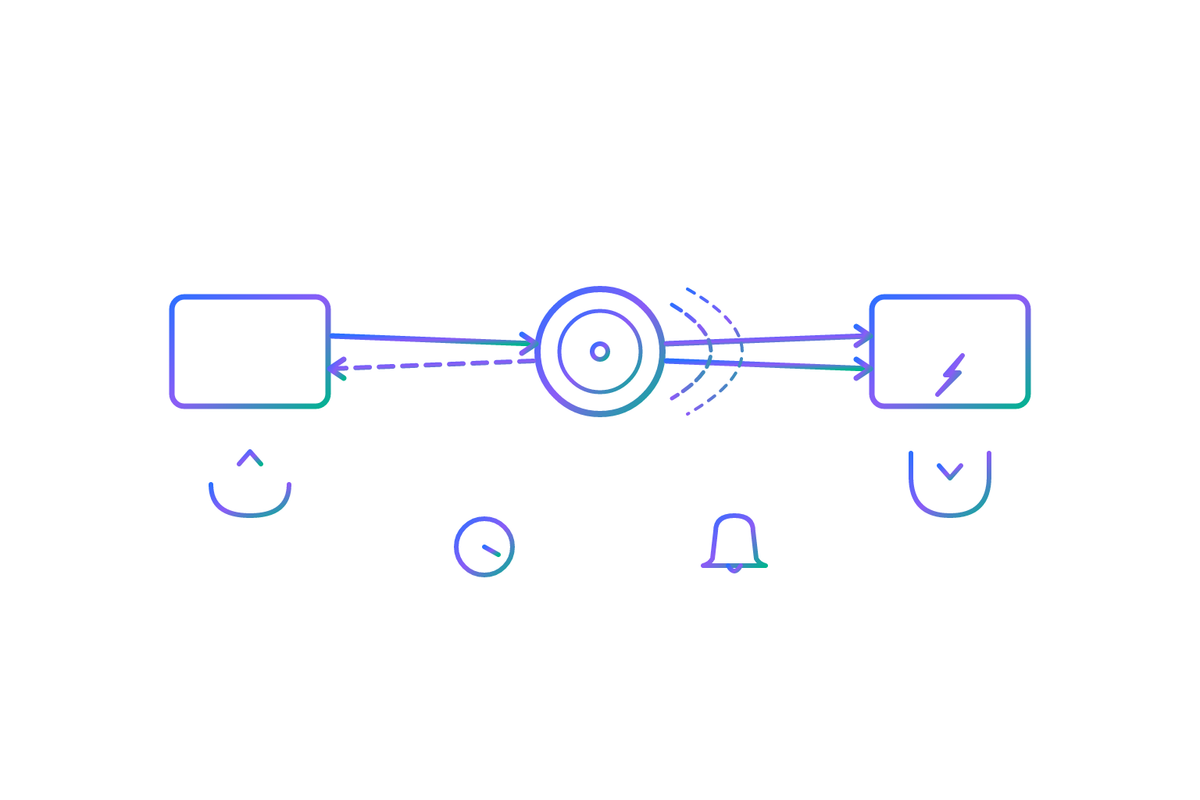
A web service always crosses a network. HTTP, HTTPS, SOAP riding on top of HTTP, even SMTP: the network hop is not optional. That's constraint one.
Constraint two: standardized protocols. HTTP-based transport is the common thread that ties SOAP, REST, and the older XML-RPC together. Constraint three narrows the data format. SOAP mandates XML and nothing else. REST leans hard toward JSON these days, though it can carry XML if a team insists. Neither style was designed with arbitrary binary data as its native format.
Fourth, a web service usually ships with a formal description of itself. SOAP services publish a WSDL contract. REST services often publish a formal description such as an OpenAPI spec. Both exist so that a stranger's code can call your service without someone reverse-engineering it from scratch.
Underneath all four constraints sits one design goal: loose coupling. Web services are built assuming the person calling them is a stranger, or will be someday. That's why teams accept the standardization overhead in the first place. And that overhead is real. A local API call needs none of it. A web service needs a web server, routing, authentication, TLS certificates, CORS headers, and documentation that someone actually has to write and keep current.
What APIs Do Without a Network
Plenty of useful work happens without ever touching a network. A mobile app querying a local SQLite database through a native library never generates a single network packet. No latency, no dropped connection, no retry logic, because there's no network in the call path.
Operating system APIs live here too. A plugin calling file I/O, or a game engine allocating GPU memory through DirectX's ID3D11Device::CreateTexture2D(), is making an API call with zero network component. A general API can also pass a plain struct, a Protocol Buffer, or a native language object directly, without serializing to XML or wrapping in JSON.
gRPC rides on HTTP/2 with binary Protobuf underneath, which puts it right at the edge of the web-service category. A raw socket connection or a bare POSIX system call sits entirely outside it. When the goal is low latency on the same machine, skipping the network eliminates an entire class of failure modes. That gives you a useful filter: if the constraint is "must run on the same machine" or "must avoid network latency," the entire web-service category is out before anyone opens a protocol comparison.
SOAP, REST, XML-RPC: What Each Trades Away
SOAP wraps every message in XML inside a rigid envelope structure, and both sides have to agree on a WSDL contract before a single call goes out. Security rides inside that envelope too: WS-Security bakes in encryption, digital signatures, and authentication as part of the message itself, not bolted onto the transport layer afterward. SOAP can also hold a stateful session across several requests, which suits multi-step transactional workflows. The cost is verbosity. XML padding adds payload size and processing overhead, and SOAP tooling tends to be heavier to build and maintain than REST counterparts. Even so, SOAP still wins in financial transactions, healthcare data exchange, and enterprise ERP integrations, where contractual rigor and audit trails matter more than response speed.
REST maps HTTP verbs, GET, POST, PUT, DELETE, directly onto resources. No envelope, no WSDL, just a URL and a verb. JSON dominates the payloads, which means lighter data and faster parsing, especially for JavaScript clients. Security lives at the transport layer through HTTPS, plus something like OAuth or an API key on top, flexible, but outside the message itself rather than woven into it. REST is stateless by default: every request carries its own context, which makes scaling easier but complicates workflows that need several steps chained together. HTTPS plus OAuth2 and OpenID Connect covers most of SOAP's security posture, but that remaining gap still matters in the most heavily regulated corners of finance and healthcare.
XML-RPC is a simpler predecessor in the same lineage: remote procedure calls encoded in XML, sent over HTTP. Rarely the pick for anything new today. It mostly shows up in legacy systems and older B2B integrations that haven't been replaced yet.
All three share the same requirement: the network hop. What separates them is how much structure and security get baked into the message itself versus how much gets pushed off onto the transport layer.
Why Enterprise SOAP Use Persists
A local API's security perimeter is the machine it runs on and the process making the call. Cross the network, and that perimeter is replaced by the entire threat surface of distributed systems: interception, spoofed endpoints, misconfigured certificates.
SOAP's answer is to make security travel with the message. WS-Security embeds encryption, digital signatures, and authentication directly in the XML envelope, so the guarantees hold no matter how many hops the message takes or what's proxying it along the way. REST's answer is different: security lives at the transport layer through TLS, plus OAuth2 or API keys at the application layer. That works fine when the transport is trusted and the client on the other end is well-behaved.
Financial and operational systems handle high-value transactions, and envelope-level guarantees matter there because they reduce the blast radius when a transport link gets misconfigured. Banking, insurance, and healthcare integrations that have to satisfy an auditor often need message-level encryption and a signed audit trail, which REST cannot produce without substantial custom layering.
Most B2B SaaS integrations don't operate under HIPAA or PCI-DSS, the client is already authenticated, the transport is HTTPS, and REST's lighter security model is genuinely sufficient. The filter is straightforward: if you need a signed audit trail and message-level encryption, SOAP is the default. If you need something fast and flexible with transport-layer auditability, REST handles it.
REST, GraphQL, and gRPC Compared
REST sits comfortably inside the web-service subset: network-mandatory, HTTP-based, JSON by default. Postman's 2025 State of the API Report, surveying more than 5,700 developers, found REST used by 93% of teams, which makes it the default starting point for nearly everyone.
GraphQL is also a web service, HTTP-based and network-mandatory just like REST, but it exists to solve one specific problem: different client apps needing different shapes of data without a specialized endpoint built for each one. Adoption figures here genuinely disagree. One 2026 estimate puts enterprise adoption around 25%. Another source from around the same period claims more than half of enterprises run it in production. GraphQL solves over-fetching and under-fetching when several clients need different slices of the same data, but teams without that multi-client complexity end up carrying its tooling and caching overhead for little payoff.
gRPC runs on HTTP/2 with binary Protobuf encoding, faster than JSON for high-throughput internal traffic, and it supports bidirectional streaming, which neither REST nor GraphQL handles natively. Its binary format and HTTP/2 features aren't exposed to browser JavaScript without a proxy like Envoy or a grpc-web-proxy translating between protocol versions. That single limitation is why gRPC almost never shows up as a public-facing API for browsers. Its real home is internal microservices, where both ends are controlled by the same team. Netflix and Uber are known for using gRPC internally, though Netflix runs REST and GraphQL alongside it too.
On the push-based side: webhooks and WebSockets. Postman's 2025 report puts webhook use at 50% of teams and WebSockets at 35%. Both are network-based and technically inside the web-service subset in terms of transport, but they push data out as events happen rather than responding to requests, handling real-time needs that plain REST isn't built for.
Netflix's setup illustrates how this plays out in practice: GraphQL (federated) for client-facing data queries, gRPC for internal service-to-service traffic, REST for third-party integrations. Each protocol earned its place by solving a specific constraint.
A Constraint-First Protocol Decision Sequence
Start with the first filter: does the integration cross a network boundary at all? If not, web services are out of the running entirely, and the right move is picking the fastest, simplest non-network API available. If yes, the web-service subset opens up.
Second filter: does the work demand message-level security, a formal contract, or a stateful multi-step transaction? In finance, healthcare, or heavily regulated B2B work, that usually means SOAP or an equivalent WS-Security setup is the defensible choice. If not, REST is the sensible default.
Third filter, only if REST falls short somewhere concrete: multiple clients needing different data shapes points toward GraphQL. High-throughput internal service-to-service traffic, with both ends under the same team's control, points toward gRPC. Real-time event-driven pushes from server to client point toward webhooks or WebSockets.
Legacy systems complicate this sequence. Many teams aren't choosing SOAP fresh; they're inheriting it because SOAP still appears in older B2B systems and aging enterprise software that hasn't been replaced due to budget or organizational constraints. That's a constraint, not a preference, and it should be treated as one.
A newer factor is appearing just outside the traditional API-versus-web-service debate. Over half of organizations have already deployed AI agents, and roughly a third more plan to within two years, yet only about a quarter of developers currently design their APIs with autonomous agents in mind. An API that will be called by an agent rather than a human needs a discoverable schema, predictable error responses, and documentation a machine can parse. That design requirement is becoming a hard constraint for B2B SaaS teams.
Documentation deserves to be treated as a structural requirement, not a task deferred until after launch. Postman's 2025 report found 93% of teams running into blockers from duplicated work, poor discoverability, and documentation scattered across tools and threads. A clear OpenAPI spec, sane semantic versioning, and a published deprecation timeline are what keep an integration from quietly degrading months after it ships.
Picking the wrong protocol and having to re-platform later costs real engineering hours, and sometimes puts an enterprise deal at risk. Running the constraint-first sequence before committing to a protocol is considerably cheaper than discovering the mismatch mid-integration.
Sources
- Web Service vs. API: what are they, and how are they different?
- Know the Differences Between Web Services and APIs
- API vs. Web Service: Key Differences Explained
- Web Service vs API – What are they & How do they Differ?
- REST vs. SOAP: Comparison and Practical SOAtest Examples
- nordicapis.com
- blog.postman.com
- altexsoft.com