REST Architecture Constraints and What They Mean in Practice
Understanding REST trade-offs matters more than checking compliance boxes.
Roy Fielding spent six years working through HTTP and URI specifications before writing any of this down. In 2000, at UC Irvine, he published his doctoral dissertation introducing REST, which stood for Representational State Transfer. His goal was not to invent a new architecture but to explain why the web already worked as well as it did, so the engineers building on top of it would understand which design decisions mattered and why they produced the results they did.
That distinction gets lost constantly, and Fielding said so himself years later, calling out "design-by-buzzword" as the common failure: teams bolt on REST constraints without knowing what each one actually costs or what problem it was introduced to solve. This is the persistent problem with most API design conversations. People treat the six constraints like a checklist of virtues instead of a set of trade-offs, and then wonder why their "RESTful" API is slower, chattier, or harder to cache than what it replaced.
The six constraints are client-server separation, statelessness, cacheability, a uniform interface, a layered system architecture, and optional code on demand. Each one was included because it produces a specific architectural property, such as scalability, visibility, or independent deployability, and each one introduces a corresponding cost. None of them function well in isolation, which is precisely where most real-world REST implementations begin to break down. This post works through each constraint as a set of costs and benefits rather than a set of tenets, and examines how they interact with each other and with competing approaches like gRPC and GraphQL.
Client-Server Separation Enforces a Clean Boundary
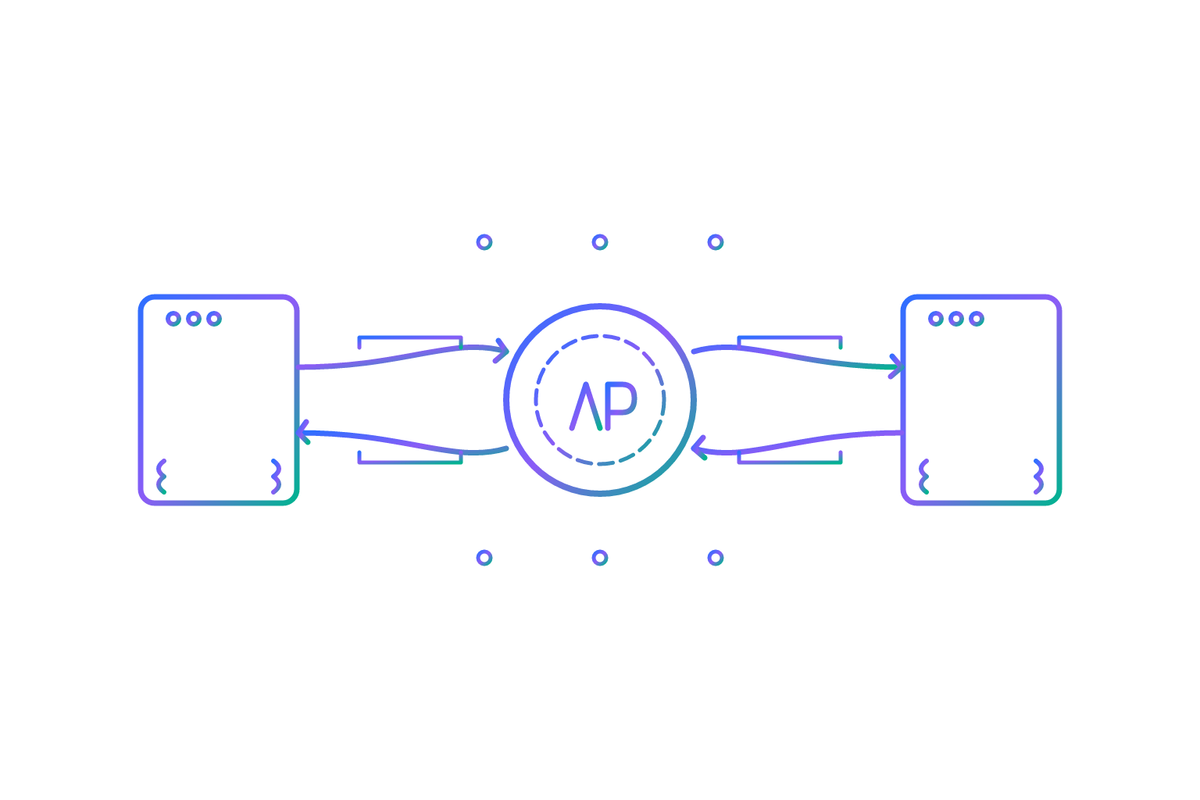
The rule is simple: the client owns the interface and whatever state the user is looking at, while the server owns the data and the logic that operates on it. Neither side needs to know how the other works internally.
That sounds obvious until you examine what it unlocks. A backend team can swap out a database, rewrite persistence logic, or ship a new endpoint without touching the frontend release calendar. The frontend team can rebuild the UI in a new framework, deliver a mobile client, or introduce a CLI without asking the backend for permission. Two teams, two timelines, and far less coordination overhead.
Single-page applications demonstrate this constraint doing real work: the browser fires off requests, gets JSON back, and updates the page without a full reload. Fielding framed the payoff in three parts: simpler components, less tangled connections between them, and better server scalability, all from one boundary drawn between client and server.
What the constraint does not address matters just as much. It says nothing about authentication, nothing about how often the client calls the server, and nothing about what happens inside the server once a request lands. Where teams actually go wrong is letting server-side rendering assumptions leak into API responses, or shaping an endpoint around one screen in one app instead of around the resource itself. That is coupling disguised as REST compliance.
Statelessness Eliminates Per-Client Server Memory
Statelessness means every request must carry everything the server needs to handle it, with no memory of previous interactions. The server treats each request as entirely self-contained, which is a deliberate architectural choice rather than a limitation.
It is the reason horizontal scaling works as cleanly as it does. Any server in a cluster can pick up any request, because none of them maintain a private session with a specific user. There are no sticky sessions, no routing based on which machine last handled a user, and no shared session store that every node must stay synchronized with. Scaling becomes a matter of adding capacity rather than managing shared conversational state across servers, and that simplicity underlies most modern cloud auto-scaling implementations.
This also explains why JWTs and OAuth bearer tokens are standard in REST authentication. If credentials cannot live in server memory between requests, they must travel with each request, every time, so that any server can independently verify the caller.
It is worth distinguishing what statelessness actually governs. It controls the relationship between server and client, not between the server and its own storage systems. A stateless API can read and write to a database, a cache, or a queue without violating the constraint. What it cannot do is remember the client from one call to the next.
Fielding considered cookies non-RESTful for exactly this reason, since they introduce client state into what is supposed to be a clean, stateless exchange. By 2000, cookie-based sessions were already widespread, which illustrates how pragmatic shortcuts taken early enough can calcify into unquestioned defaults.
The cost of statelessness shows up in payload size. Every request re-sends its context: tokens, preferences, pagination cursors, and whatever the server would otherwise have remembered. Statelessness trades server-side simplicity for larger individual requests, and that is a genuine cost worth accounting for when evaluating bandwidth and latency budgets.
Cacheability Is a Contract, Not an Optimization
Responses must declare whether they are cacheable, and the server bears responsibility for making that declaration explicit. Clients and intermediaries should not have to infer cacheability from context, and when they do, the results are inconsistent enough to cause real problems.
Three headers do the practical work. Cache-Control tells downstream components how long a response stays fresh before another request is warranted. ETag provides a validation token so a client can ask whether a resource has changed and receive a 304 Not Modified response instead of the full payload, saving bandwidth in both directions. Last-Modified and s-maxage allow shared caches like CDNs to revalidate independently, on a schedule separate from a private browser cache.
CDNs are a direct physical expression of this constraint. An edge node holding a response marked public and still within its freshness window never needs to contact the origin server, and neither does the requesting browser. The entire caching layer of the internet operates on labels the server placed in the response.
Many servers get those labels wrong. Applying Cache-Control: no-store to every response eliminates whatever value a CDN was providing, while omitting cache headers entirely leaves the decision to intermediaries that will guess incorrectly. There is a structural point here that connects to API design choices more broadly: GraphQL routes everything through HTTP POST, which bypasses standard HTTP cache semantics unless someone builds an explicit workaround. REST's convention of using GET for reads is not arbitrary. It is the design decision that makes cacheability practical, and it is a significant reason a well-configured REST API can outperform a naively implemented GraphQL service on latency.
The Uniform Interface: Standardized but Often Incomplete
The uniform interface decouples client and server evolution by standardizing how they communicate. The contract lives in the interface itself rather than in knowledge of what the server is doing internally.
It breaks into four components, and APIs handle them with very uneven skill. Resource identification via URIs means resources have stable addresses so clients know where to find something without knowing how it is stored. Most APIs handle this adequately. Manipulation through representations means the server provides a representation, typically JSON, rather than exposing its internal data structures directly. This is also generally handled well.
Self-descriptive messages are where implementations become shakier. Each message is supposed to carry enough metadata, including Content-Type headers, the correct HTTP method, and accurate status codes, to describe how it should be processed. Many APIs do this incompletely: returning 200 for operations that failed, or ignoring content negotiation entirely.
Then there is HATEOAS, which requires responses to include hypermedia links guiding clients through available next actions. Almost no production APIs implement this. That gap is architecturally significant: it is the difference between Level 2 REST and the full model Fielding described, and most of the industry has quietly agreed to call Level 2 "REST" and treat the conversation as closed.
The most common failure at the uniform interface level is APIs built in an RPC style: endpoints named as verbs like /getUser or /createOrder, treating HTTP as a transport pipe rather than a semantic layer with meaning built into its methods and status codes. When an API depends entirely on external documentation to explain what each endpoint does, it has not decoupled client from server. It has moved the coupling out of the code and into documentation that will not stay current.
HATEOAS: What Self-Describing APIs Buy
HATEOAS requires responses to include links representing what the client can do next, so the client navigates by following those links rather than by constructing URLs from documentation it read at integration time.
The benefit accrues primarily on the server side. A server can rename an endpoint, restructure a URL, or move an action to a different resource, and clients that navigate by link relations rather than hardcoded paths will continue to function without modification. Fielding called this hypermedia as the engine of application state. The idea is that the server declares what transitions are available at each step, and the client reads those declarations rather than maintaining its own model of the API's structure.
The reason almost nobody builds to Level 3 is structural rather than technical. Hypermedia-aware clients require a different programming model than the approach most developers learn first, which involves reading documentation once and writing code against fixed URLs. Most consumers of an API, whether mobile applications or single-page applications, are built by teams that do exactly that. The client-side infrastructure for actually following links is rarely built because nobody on the consuming side requested it, and the cost of designing a link structure is immediate while the benefit of a server that can evolve without breaking clients is delayed and difficult to demonstrate in a short development cycle.
HATEOAS is skipped for structural and incentive reasons, not because it is a flawed idea. The payoff, a server that can change its URL structure without coordinating with every client, materializes eighteen months later when a migration is needed, not during the sprint when the feature ships. Calling Level 2 a practical stopping point is a defensible engineering decision, but it falls short of REST operating as Fielding designed it.
Layered Systems Let Intermediaries Do Real Work
The layered systems constraint requires each component to interact only with its immediate neighbor. Neither the client nor the server needs visibility into the full topology of what lies between them, and that architectural opacity enables a significant amount of infrastructure that most systems depend on.
Load balancers distribute requests across a pool of servers without the client needing to know the pool exists. API gateways handle authentication, rate limiting, and routing at the entry point, so backend services receive only requests that have already been validated. CDNs serve cached responses from edge locations using exactly the caching metadata discussed earlier, without involving the origin server. SSL-terminating proxies and firewalls operate in the background, invisible to both ends of the conversation.
Fielding acknowledged that layered systems are not free, since every additional layer introduces latency. He argued the cost is justified when shared caching at organizational boundaries absorbs enough traffic to make the additional hops worthwhile on balance.
Microservices architectures apply this constraint at scale. A client calls a single gateway, the gateway determines which backend service owns the requested resource, and the client is never exposed to changes in the internal topology. This breaks down when clients bypass the gateway and call internal service URLs directly, embedding assumptions about a topology that will change. When it does change, those assumptions produce failures that could have been avoided by respecting the layering constraint.
Code on Demand Is Optional by Design
Code on demand allows a server to extend client capabilities by delivering executable code. JavaScript loaded by a browser is the standard example: the server ships logic, the client executes it, and the client's functional scope expands beyond what was present at installation time.
Its optionality is an architectural fact rather than a hedge. A system gains the benefits of this constraint only in the parts that actually use it, and an API that never delivers executable code loses nothing by omitting it. Fielding included this constraint because real systems operate across organizational boundaries, and different parts of those systems have legitimately different requirements. The architecture needed to accommodate that variation rather than impose uniformity where it did not serve a purpose.
In practice, most REST APIs never engage this constraint. Where it does appear, in browser applications pulling in JavaScript widgets or clients receiving server-delivered logic, it is typically invisible to the developers consuming the API.
How the Six Constraints Interact and Trade Off
None of these six constraints operates independently, and that interdependence is precisely what gets missed when they are treated as a checklist.
Statelessness is what makes cacheability practical. A response entangled with session state cannot be safely cached by anything downstream, because the cached version may not reflect the state of a different session. Cacheability is what makes layered systems worth the latency they introduce, since without cacheable responses, every additional hop through a CDN or proxy is overhead with no corresponding benefit. The uniform interface is what makes layered systems safe to construct, because self-descriptive messages allow intermediaries to inspect and act on requests without guessing at their meaning.
The costs do not disappear because the benefits are real. Statelessness produces larger individual requests and constant authentication overhead, which is a deliberate trade for the ability to scale horizontally without coordinating session state. Layered systems add latency that only pays off when caching is implemented correctly rather than added as an afterthought. The uniform interface, taken all the way to HATEOAS, requires client-side infrastructure that most engineering teams have not built and are not currently planning to build.
Comparing REST to its common alternatives makes the trade-offs clearer. gRPC's streaming model introduces connection-level state intentionally, sacrificing REST's clean horizontal scaling in exchange for lower latency on high-frequency service-to-service calls. GraphQL's use of HTTP POST for all requests bypasses REST's native HTTP caching in exchange for precise field selection and reduced over-fetching. Neither approach is wrong. Each one prioritizes a different set of constraints, and understanding REST's own trade-offs is what makes those choices legible rather than arbitrary. Fielding's point holds throughout: the constraints function as a coherent set when a system's actual requirements match what the set was designed to address. Applying individual constraints without understanding why they exist produces a system that absorbs their costs without capturing their benefits.
Richardson Maturity Model: Where APIs Actually Stand
The Richardson Maturity Model provides a rough four-level framework for measuring how RESTful an API actually is, as distinct from how it is described in its documentation.
Level 0 treats HTTP as a transport tunnel: RPC-style calls dressed in HTTP, with no resource identification and no meaningful use of HTTP semantics. This violates the uniform interface outright. Level 1 introduces actual resource URIs, breaking a single catch-all endpoint into distinct addresses for distinct resources, which represents partial compliance with the uniform interface. Level 2 adds correct use of HTTP verbs, meaningful status codes, cacheable GET requests, and errors communicated through status codes rather than buried in 200 responses.
Level 2 is where the substantial majority of production APIs operate, and that is a reasonable stopping point once the cost of Level 3 is weighed honestly against what it delivers.
Level 3 is HATEOAS: responses carrying hypermedia links to available next actions, and clients that navigate by following those links rather than constructing URLs from memory. It is rare in production, for all the reasons covered above, and that is unlikely to change in the near term.
The Richardson Maturity Model is most useful as a diagnostic rather than a ranking. Knowing which level an API actually occupies, rather than which level its README asserts, is what transforms REST from a buzzword into an engineering position that can be articulated, defended, and deliberately adjusted when requirements change.