Banking API Examples Across Core Use Cases
Know which banking job you actually need before choosing a provider.
Banking APIs get lumped into one category, but they cover six or seven distinct jobs. Payments, identity checks, account data, fraud flags, lending decisions: each one runs on different mechanics, different providers, different failure modes. Most teams pick a provider before mapping out which of those jobs they actually need done.
That sequencing is expensive. Teams grab a provider off a landing page before sorting out whether they need account access, payment initiation, identity checks, fraud tooling, or some mix of the four. Those jobs don't overlap the way people assume. Treating them as interchangeable means paying for a full Banking-as-a-Service platform when a read-only data feed would have been sufficient. Walking through each job, with real providers and real mechanics attached, is more useful than another comparison chart of logos.
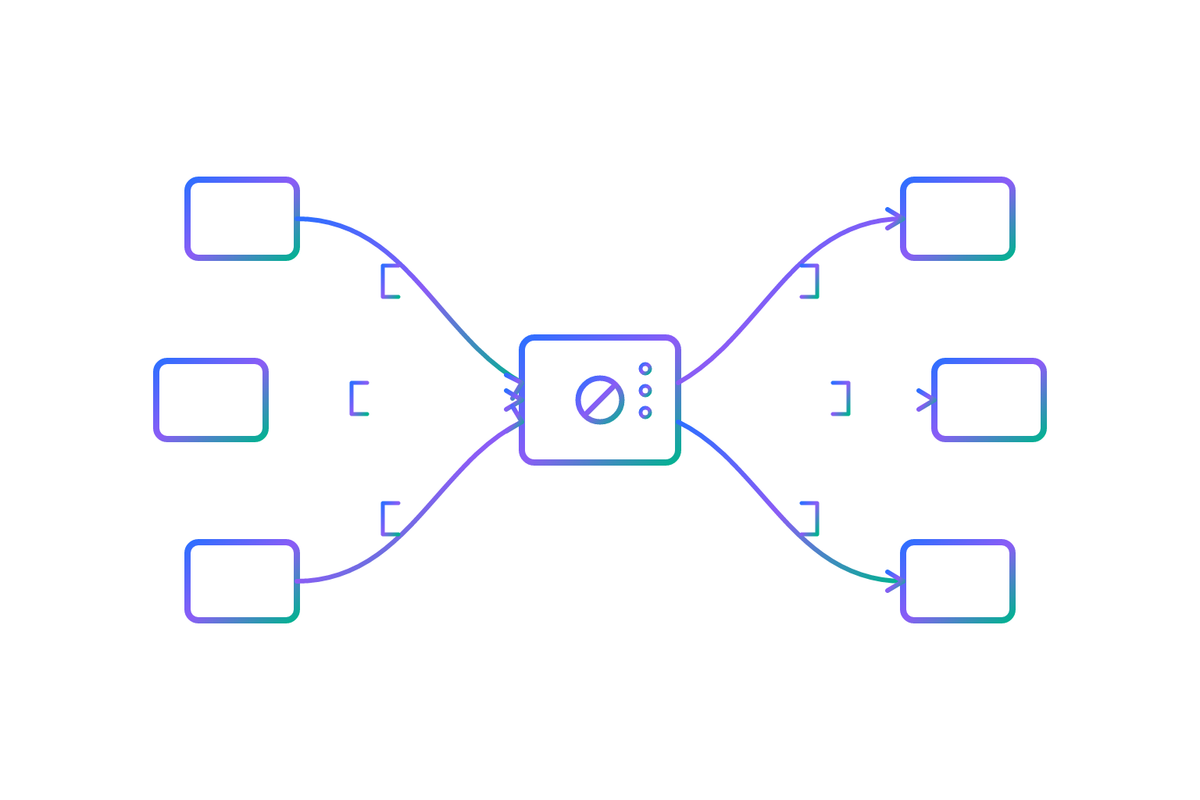
Most banking API setups follow the same layered pattern regardless of what the marketing language claims. Core services (accounts, payments, KYC) each get boxed into their own module, and each module gets its own API. Nothing talks to anything else directly.
Sitting in front of all that is a gateway that serves as the chokepoint by design. Every call gets checked: tokens verified, OAuth handshakes confirmed, and only then does the request get routed to whatever service actually handles it. Core banking systems never sit exposed to the open internet. The gateway takes the hit so they don't have to.
A banking API is a mix of request-response calls and event flows, and the two run on different clocks. Some things happen because a user tapped something. Other things happen because a webhook fired off in the background five minutes later, with nobody watching.
In a wallet-app scenario, a user taps "open account," the app calls a licensed bank partner through the API, the bank creates the account on its end, and the app shows a success screen. The regulated bookkeeping stays locked inside the bank the whole time. The app handles the interface, the support, and the orchestration that makes five separate backend calls look like one button press.
Reading Financial Data Across Institutions
This is the job of pulling a customer's balances and transaction history from wherever their money lives, live, with consent, across as many banks and credit unions as the product needs to cover.
A budgeting app is the textbook case. Opening it shows current balances and recent transactions pulled straight from linked accounts at whatever banks the user actually uses, with no manual upload or CSV export required.
Plaid is a widely used option in this space. It connects to a wide range of institutions, credit unions included, and handles the connectivity and data retrieval so a developer isn't building bank integrations from scratch. That covers balance checks, transaction history, account authentication, and identity verification, all through one interface. Budgeting apps use it for spending breakdowns, lenders use it to size up credit risk, and neobanks use it to verify a new account as part of onboarding.
MX focuses on data enrichment and transaction categorization, a step past raw connectivity. If a product needs clean, labeled, analytics-ready data instead of a raw feed it has to sort out itself, MX is the better fit. Plaid is the right choice for connectivity; MX is the right choice for enriched, analytics-ready output.
Triggering Payments Directly From Your Product
Here the job flips from reading data to moving it. A third-party platform triggers a payment straight from a user's bank account, using authentication and consent that got locked in earlier in the flow.
Buying something online and paying directly from a bank account instead of pulling out a card is the clean example. The API fires off the debit without the customer ever leaving the merchant's checkout page.
Processing the transaction, checking credentials, and updating balances trigger a burst of API calls, usually all within milliseconds. That speed matters because a slow or uncertain payment confirmation degrades user trust directly.
Providers split by region and use case, and the split affects total integration cost and determines which features actually appear in the product. Stripe is the default starting point for most startups: it handles card payments, ACH transfers, subscriptions, and payouts, and its developer tools set the bar the rest of the industry gets measured against. TrueLayer specializes in open banking under Europe's regulatory framework, running instant account-to-account payments, and it makes sense when the UK or EU is the primary market but adds little value outside it. Modern Treasury handles payment operations at a deeper level, automating reconciliation and ledgering across ACH, RTP, FedNow, wire, push-to-card, stablecoins, and paper checks. It is built for companies where moving money is the core product, not a secondary feature.
Verifying Identity Before Any Money Moves
Before any money changes hands, the product needs to confirm that a user is who they claim to be. That means checking against sanctions lists, screening for politically exposed persons, and clearing whatever regulatory box needs checking before onboarding finishes.
The API layer handling this leans on token-based authentication, encryption, and constant activity monitoring, so only verified systems and verified users ever touch sensitive account data.
Plaid covers a good chunk of this too: sanctions screening, PEP checks, watchlist screening for AML compliance, and identity verification tied into account authentication. Onfido handles the international side of the same problem, and it is the right choice when a product needs identity checks that work across multiple countries. If the product only ever serves one country, Onfido is unnecessary. If it serves multiple countries, skipping it is the gap that appears in an audit six months later.
Flagging Fraud Anomalies in Real Time
Fraud detection runs on a different clock than everything above it. Aggregation and KYC both start because a user did something: linked an account, signed up, initiated a transaction. Fraud detection runs independently of any user action. It watches transaction patterns continuously and flags anomalies as they happen, sometimes catching a problem before the account holder is aware anything is wrong.
That is what makes it architecturally distinct. It relies on the webhook and monitoring layer sitting on top of transaction APIs, not on a user initiating anything.
The clearest sign this has become infrastructure is the FedNow Network Intelligence API, launched by the Fed specifically for real-time fraud and risk signals. That is fraud detection built into the payment rail itself, rather than added afterward by a third-party vendor.
Beyond transaction-level flags, institutions also monitor the API layer itself: usage patterns, latency, request volume. A spike in call patterns can flag a problem before it produces a fraudulent transaction downstream.
Delivering Credit Decisions Inside Your Product
The job here is showing someone a loan offer, a credit score, or an underwriting decision without sending them to a bank's website. A loan comparison site pulling a real-time credit score through a banking API and displaying pre-approved offers on the spot is the standard example.
Plaid Check plays a direct role here, feeding credit and lending decisions using the same financial data pipes used for account aggregation. Plaid also opens up access to a user's broader financial picture for underwriting purposes, giving a lender visibility into income, balances, and transaction history before making a decision.
A lending flow stitches together four separate jobs that must fire in order. The account aggregation API pulls income, balances, and transaction history. The identity and KYC API confirms the applicant is who they claim to be. The credit decisioning API returns a score or a pre-approval signal. Then the payment initiation API handles the disbursement once approval clears. If any one of them fires out of order, the pre-approval flow breaks.
Issuing Financial Products Under Your Brand
Sometimes reading data and moving payments is not enough. The product needs to actually issue something, such as a checking account, a debit card, or a lending product, under its own name, without becoming a bank itself. That is what Banking-as-a-Service exists for: a licensed partner bank handles the regulated part, and the product wraps its own brand around it.
Open banking and BaaS get confused regularly, and the mix-up carries real cost. Open banking reads data or initiates payments with a customer's consent. BaaS issues an actual financial product under a bank's license. That difference determines the entire compliance model and the commercial terms.
Unit and Galileo are the names that come up most in this space. Both bundle significant functionality into the package, trading some flexibility for a more complete out-of-the-box offering. That convenience comes at a higher baseline price and less room to swap pieces out later if the product's needs shift. That tradeoff makes sense for a team that wants to launch fast and does not want to manage the compliance layer directly, but not for a team that needs granular control over each component.
On the product side, BaaS APIs range from simple features like checking balances and pulling transaction histories to specialized capabilities including credit scoring, card issuance, freeze and spending-limit controls, and tokenization for contactless payments.
Matching Use Cases to the Right Provider
For a basic fintech product built in the US, the baseline stack most teams land on is Stripe for payments, Plaid for financial data, and Persona for KYC. All three ship documentation and sandbox environments solid enough that a team can build and test the whole flow before spending anything on production access.
Score providers on coverage, sandbox fidelity, SLAs, exit terms, and event quality before comparing brand names or marketing positioning. A polished homepage says nothing about what happens when a webhook fails at 2 a.m. and the root cause is not immediately clear.
An integration survives real transaction volume only when it handles idempotency, webhook handling, reconciliation, and the ability to swap a provider without rewriting large portions of the codebase. Skipping those concerns means the integration works fine in demos and breaks under production load.
Provider selection also shifts by geography. In the UK and EU, TrueLayer covers open banking and PSD2-compliant payment initiation, and alignment with regional regulatory frameworks and consent flow requirements matters significantly. In the US, the FDX API standard is where open banking data is heading, and FedNow, accessed through a middleware provider, is the route for real-time payments. For cross-border identity verification, Onfido, now part of Entrust, is the most commonly cited option.
Banking APIs cover six distinct jobs, each with its own mechanics and its own short list of providers built to do that job well. Map the job first, then pick the provider. Reversing that order typically results in a rebuilt integration months into a launch.
Sources
- API banking 101: What it is and how it works | Stripe
- Banking API Integration: Bank APIs, Open Banking & Providers | DashDevs
- Most popular banking API examples 2025 - Geniusee
- Exploring Real-World Use Cases of API Banking Across Industries | Castler
- 10 Open Banking API Use Cases Every FinTech Leader Must Know
- Deconstructing Middleware in Modern Banking: A Deep Dive into API Architecture | by Lashan Sivaganeshan | WSO2 Solution Architecture Team Blog | Medium
- blog.finexer.com
- confluent.io