Why Integration Bugs Surface in Customer Support Before Engineering
Customer support discovers integration failures hours before engineering dashboards register them.
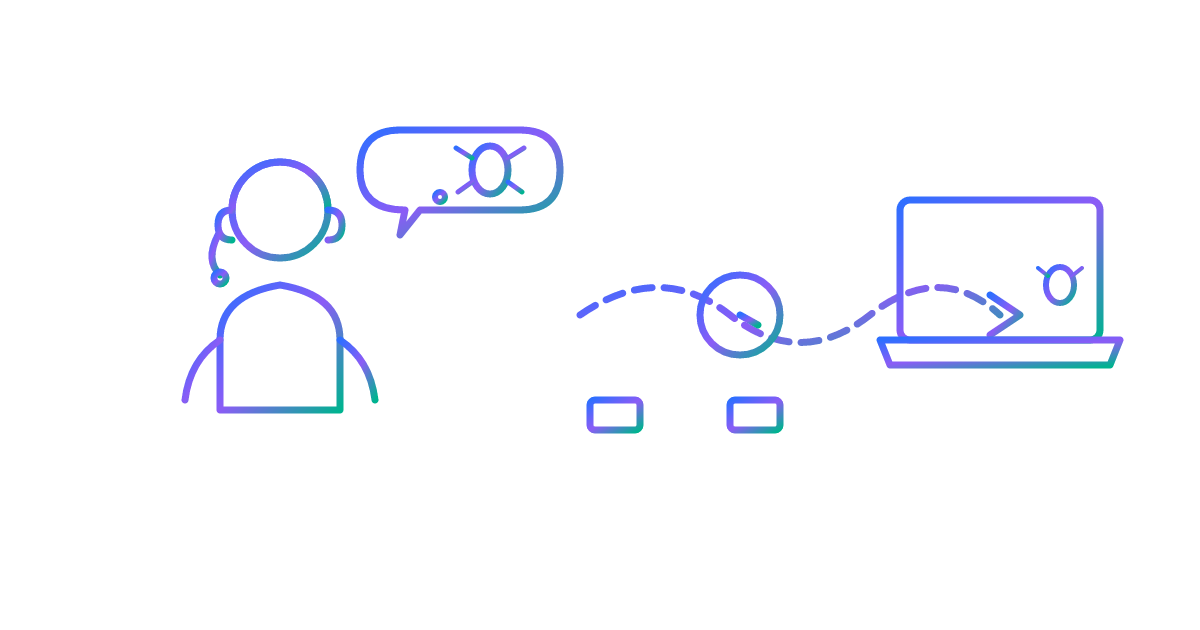
Here's what makes integration failures so maddening: they don't look like failures from the inside.
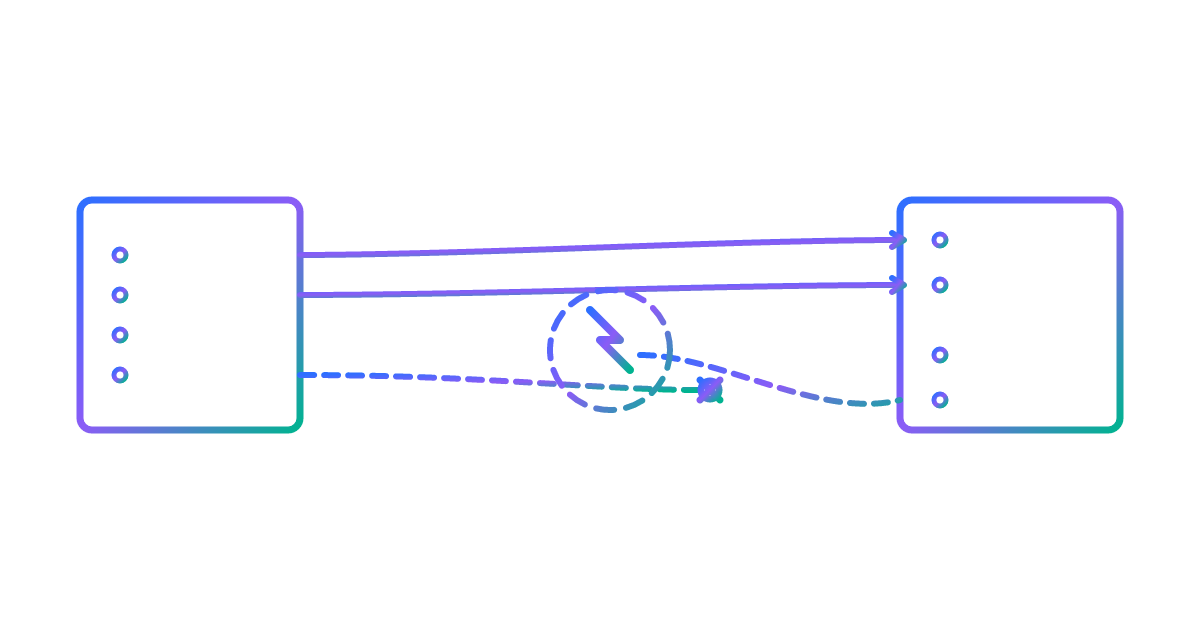
Your service receives a request. It processes it. It sends a response. Everything returns a 200 OK. Logs look clean. Dashboards are green. But the downstream thing that was supposed to happen never happened. A Stripe charge completed, but the account never activated. A Salesforce record was submitted, but it never appeared. An invoice connector ran, but nothing posted to the ERP. Nobody's pager goes off. Nobody even flinches.
It's like sending a letter, watching it leave your hand, and assuming it was delivered because your arm still works.
The reason these failures are so hard to catch comes down to three properties that break standard monitoring assumptions.
Silent failures. The handoff between systems completes without an error code. There's nothing to catch.
Intermittent failures. They only appear under specific combinations of data state, account configuration, timing, or vendor behavior. You can't predict them in advance, and they won't reproduce on command.
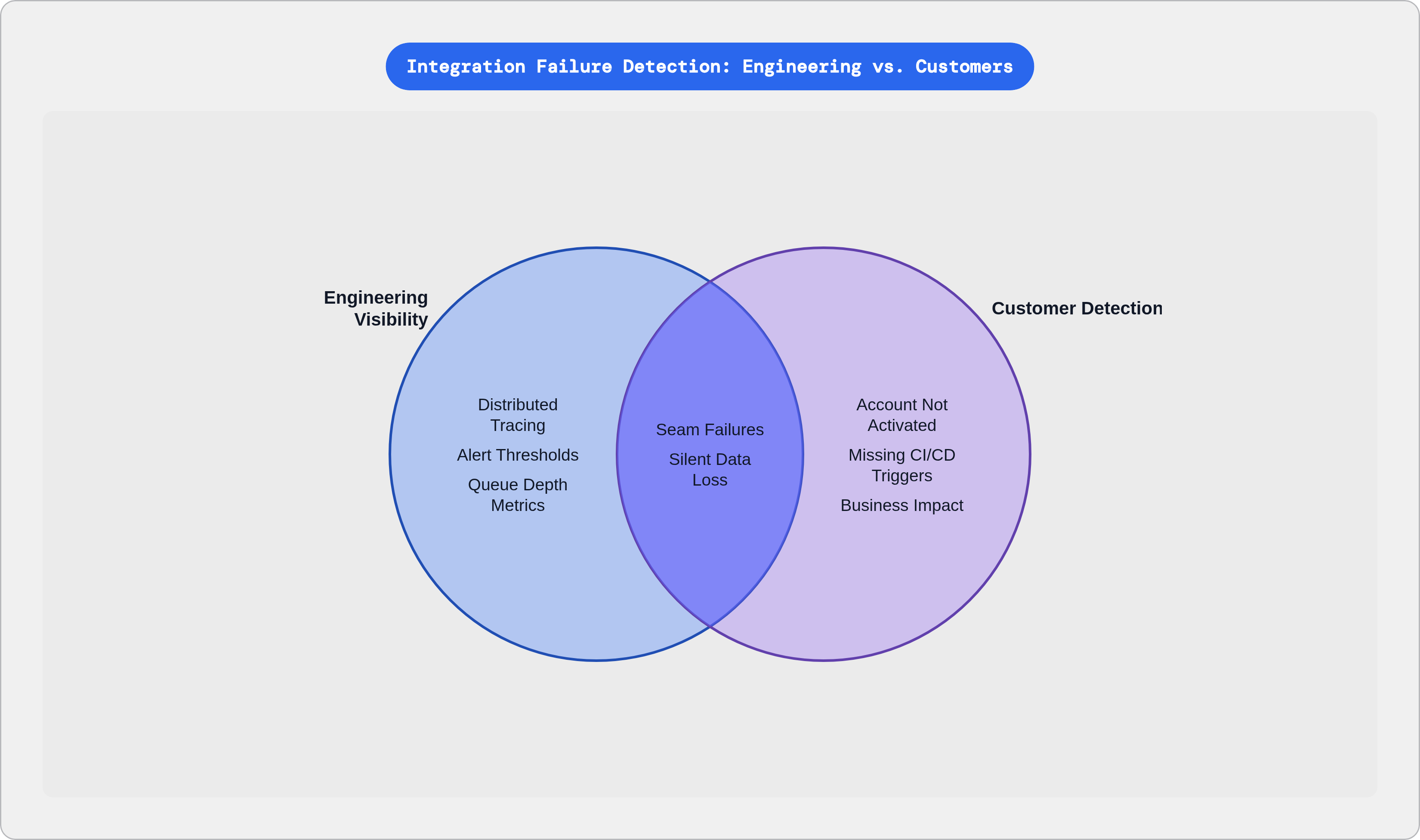
Seam failures. They don't live inside any system a single team owns. They live in the space between systems, where both ownership and instrumentation get murky fast.
Distributed tracing tools like Datadog, Honeycomb, and New Relic can follow a transaction across service boundaries. But they have to be explicitly configured to do that. Most teams instrument their own service thoroughly and stop wiring things up right at the handoff point. The trace stops exactly where the failure lives — which means the monitoring gap and the failure gap are the same gap, wearing the same disguise.
Alert thresholds make this worse. They're calibrated to known failure modes. A small drop in webhook delivery success will never breach an alert threshold. That same rate, applied at scale, can mean hundreds of affected customers per day. Engineering never sees it because the failure never crosses the line.
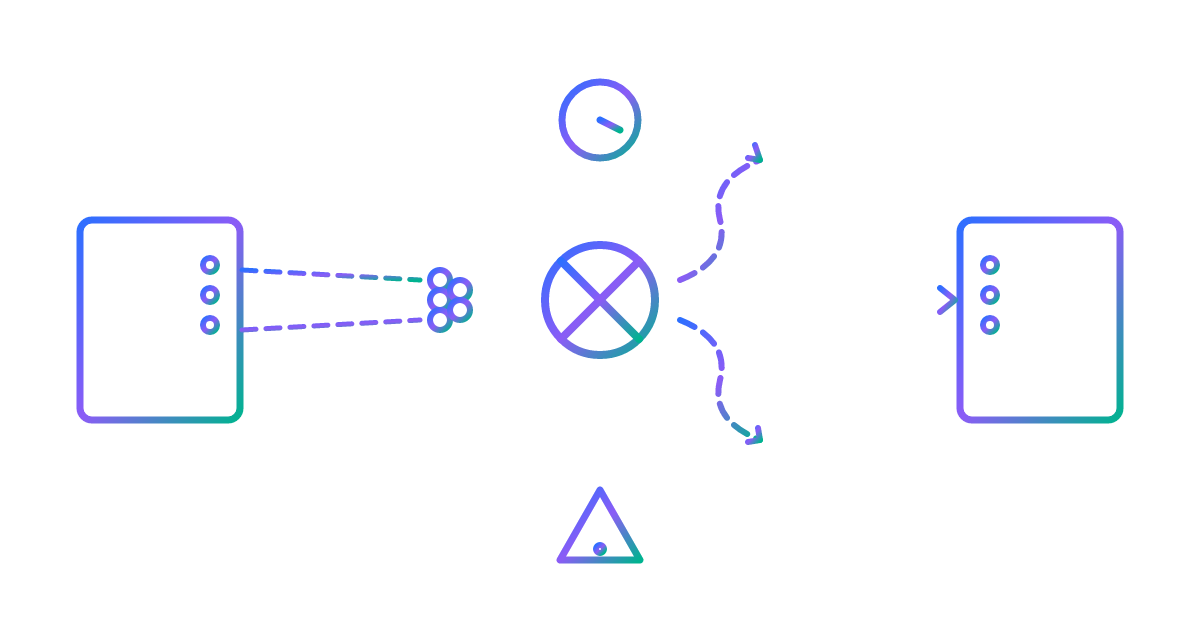
Asynchronous architectures add a time dimension. Event queues and message brokers give engineering visibility into queue depth. They provide no visibility into the downstream effect of what was or wasn't processed. The customer experiences the failure first, sometimes by hours, and then someone has to manually connect the dots back to queue behavior after the fact.
The result is a failure mode that is real, ongoing, and completely customer-visible, while being absent from every dashboard engineering is watching.
Staging Can't Reproduce Where Integration Bugs Hide
Staging is useful. It's just not production. And the gap between the two is exactly where integration bugs live.
Vendor sandboxes and test modes are approximations, and imprecise ones. Stripe's test mode doesn't replicate rate limiting behavior. Salesforce sandboxes don't reproduce asynchronous processing delays or the schema drift that live APIs quietly accumulate over time. That much most engineers already know, or at least suspect.
The bigger problem is combinatorial. Real production is irreproducible in staging because production has history. Account configurations accumulated over months or years. Data created before a schema migration. OAuth tokens in specific refresh states. Users on legacy plan tiers with different entitlement logic. No staging environment captures all of that. You'd have to rebuild the entire lived history of your customer base to get close, which no team has done and no team realistically will.
Third-party APIs also change on timelines that have nothing to do with your sprint cycle. Stripe, Salesforce, and Twilio issue deprecation notices and breaking changes that can silently invalidate production integrations before engineering has acted on them. Stripe's own documentation acknowledges that webhook delivery is not guaranteed and recommends polling as a fallback. That's not a footnote. That's the vendor explicitly treating silent delivery failure as a known, expected production condition. Read that again if you need to.
Consumer-driven contract testing using the Pact framework, which teams at Atlassian and REA Group have adopted, verifies that provider and consumer agree on API contracts continuously, catching schema drift before it reaches production. Adoption across the industry is still low, which is its own interesting problem.
The practical consequence is straightforward: the first full-fidelity test of many integration edge cases happens in production, with real users, whether anyone planned for that or not.
Customers Became Your Integration Test Suite Uninvited
Real users exercise production systems continuously. Across the full combinatorial space of data states, device states, account histories, and timing windows that no QA suite comes close to replicating.
A B2B customer who processes invoices every Tuesday morning through a specific ERP connector is, functionally, a scheduled integration test. Running on a schedule engineering never set up. Against conditions engineering never anticipated. They did not apply for this job.
Knock knock. Who's there? The integration bug. The integration bug who? Exactly — nobody in engineering knows either.
When that test fails, the customer contacts support. Usually within hours. And here's the uncomfortable part: that support ticket is often a faster and more accurate signal than anything in engineering's monitoring stack.
Support agents have domain pattern-matching that engineers don't have in real time. An agent handling billing queries all day immediately recognizes "charge processed, account not activated" as an integration failure pattern. Without knowing the technical root cause. Without access to the logs. Just from the shape of the complaint. That's genuinely good diagnostic work, done by people who are supposed to be handling customer relationships, not triaging infrastructure failures.
The volume dynamic matters here too. Integration bugs often affect a narrow slice of users: those on a specific plan, using a specific OAuth flow, with a specific account history. The affected population is too small to move aggregate metrics. But it's large enough to generate a concentrated surge of tickets that support sees clearly and dashboards never register.
GitHub's 2018 database failover incident shows exactly how this sequence plays out. Webhook deliveries were delayed for hours. Customers reported missing CI/CD triggers to support. GitHub's public status page was updated after the customer signal had already accumulated. The customers knew before the status page did. That's the order of operations most teams are running on, whether they've acknowledged it or not.
Bad Structure Turns Detection Gaps into Week-Long Delays
Finding out about a failure through a support ticket is already bad. What happens next is usually worse.
The team that built the integration is rarely the team fielding the support ticket. Tickets land in a general queue and must be manually escalated before they reach the engineers who own the relevant code. That escalation path adds time. Sometimes a lot of it.
Integration bugs also introduce a specific kind of triage ambiguity that grinds everything to a halt. When a failure lives at the seam between systems, each party can plausibly read it as originating on the other side. Internal service A points to internal service B. Internal service B points to the vendor. The vendor points back at the integration configuration. Support agents without access to both systems' logs can't resolve this on their own, so the ticket sits while everyone figures out whose problem it actually is. It can take days just to answer that question.
Slack's post-mortems from their 2019 to 2022 period document this pattern. Third-party app integrations stopped delivering messages to enterprise customers. Tickets accumulated in support. Internal alerting escalated only after the customer signal was already substantial.
The resolution timelines that result from this tend to land in the range of days, not hours. The engineering team isn't incapable — the failure simply bypassed the automated detection loop entirely and arrived through a manual, latency-heavy channel that nobody designed for speed.
This is primarily a structural problem, not a people problem. The organizational friction is a downstream consequence of building integrations without shared observability across the seam. The people involved are responding rationally to a structural gap. They're just doing it slowly, in ways that cost more than they should.
Silent Failures Compound Into Staggering Hidden Costs
The cost structure of an integration failure that surfaces through support is different from a standard in-app bug. It compounds in ways that don't show up cleanly in post-mortems.
The bug itself has to be fixed. That's the easy part to measure. But the data inconsistencies created during the failure window often require manual remediation: backfills, refunds, re-provisioning. Work that lives outside engineering's normal incident resolution process and rarely shows up in post-mortem cost estimates. Which means it's chronically underestimated, every time.
Support labor is being spent on failures that a monitoring system should have caught. That's a category error, not just an inefficiency. Support should be generating signal, not doing detection.
Gartner estimated in 2021 that poor data quality costs organizations an average of $12.9 million per year. A large portion of that originates in integration failures. Data that never arrived. Data that arrived corrupted. Data that arrived out of sequence. The downstream effects compound quietly, and by the time someone adds them up, the number is usually surprising.
In B2B contexts especially, integrations are load-bearing. When a Salesforce sync breaks or an ERP connector fails silently, the customer's own operations are affected. Not just their experience of a feature. Their actual business. The trust cost that follows is harder to quantify, but it shows up in churn conversations and renewal negotiations.
Late detection also closes off the cheapest remediation windows. A failure caught at the seam during build is a configuration fix or a contract adjustment. The same failure caught through a support ticket, after a week of silent data corruption, is a recovery project. The gap between those two outcomes is almost entirely a function of how long the failure went undetected.
Three Levers That Actually Close the Gap
There are three places to attack this, and they work at different layers.
Observability at the seam. Distributed tracing has to be extended through integration boundaries, not stopped at them. OpenTelemetry and synthetic transaction monitoring can cover what standard APM misses. But only if teams explicitly wire it end-to-end, which takes mandate and resources and doesn't happen by accident. For teams that can build this, sufficient observability investment catches integration failures before customers do.
Support-to-engineering signal routing. Faster escalation pipelines reduce the time between customer detection and engineering awareness. Ticket-volume-triggered alerts, shared channels between support and on-call engineering, explicit SLAs on integration-related escalations. The goal isn't to eliminate support as a detection channel. It's to route what support sees into engineering's awareness quickly enough that it functions like a fast signal rather than a slow one.
Contract testing at design time. Consumer-driven contract testing verifies that provider and consumer agree on API contracts continuously. It catches schema drift and breaking changes before they reach production. Teams at Atlassian and REA Group have used this to eliminate entire classes of silent production failures. Adoption remains low across the industry, which is genuinely puzzling given how well it works.
The deeper structural fix sits at the build layer. Integrations built on managed, pre-instrumented connectors with built-in auth handling, schema-change management, and workflow observability shift the burden of catching failures away from ad-hoc monitoring and toward infrastructure designed to surface them. That's a different architectural premise from the start, not just a better monitoring strategy.
Some failures will always surface through support first. Rare edge cases, novel vendor behavior, one-off account configurations. That's fine. But there's a real difference between "support catches the weird stuff" and "support is how we find out about structural, repeatable, predictable integration failures." For a lot of teams right now, it's the latter. That's the thing worth fixing.